Kamis, 25 Maret 2010

Srinivasa Ramanujan (1887-1920 )

Srinivasa Ramanujan was one of the India’s greatest mathematical geniuses. He made substantial contributions to the analytical theory of numbers and worked on ‘elliptic functions’, ‘continued fractions’, and ‘infinite series’. Srinivasa Ramanujan was a great Mathematician, who became world famous at the age of twenty-six. He was born on December 22, 1887 in his grandmother’s house in Erode, a small village of Chennai, Tamilnadu, India. He was the son of K. Srinivasa Iyengar & Komalatammal. His father worked in Kumbakonam as a clerk in a cloth merchant’s shop and his mother was a housewife and also sang at local temple. When Ramanujan was a year old, his mother took him to the town of Kumbakonam, near Chennai.

When he was about five years old, Ramanujan admitted to the primary school in Kumbakonam although he would attend several different primary schools before entering the Town High School in Kumbakonam in January 1898. At the Town High School, Ramanujan was the scholar student and showed himself an able all round scholar. In 1990, he began to work on his own on mathematics summing geometric and arithmetic series. In December 1889, he contracted smallpox. Continuing his mathematical work Ramanujan studied continued fractions and divergent series in 1908. At this stage, he became seriously ill again and underwent an operation in April 1909 after which he took him some considerable time to recover. He married on July 14, 1909 when his mother arranged for him to marry a ten-year-old girl S. Janaki Ammal. Ramanujan did not live with his wife, however, until she was twelve year old.

Ramanujan could not complete his college education because of illness. He was so interested in mathematics that he learned on his own. He found out new formulas for solving mathematical problems and wrote articles about them. Professor Hardy a scientist in the Cambridge Univesity saw one his article and impressed by his knowledge, took Ramanujan to England. Ramanujan was considered as the master of theory of numbers. The most outstanding of his contributions was his formula for p(n), the number of ‘partitions’ of ‘n’. It was in 1914, while he was working in Trinity College, he developed the ‘Number Theory’ and for his valuable contribution, was elected the ‘fellow of Trinity College’ on October 18, 1917. He returned to India in 1919 and began Research.

Ramanujan continued to develop his mathematical ideas and began to pose problems and solve problems in the journal of the Indian Mathematical society. He developed relations between elliptic modular equations in 1910. After publication of a brilliant research paper on Bernoulli numbers in 1911 in the Journal of the Indian Mathematical Society he gained recognition for his work. Despite his lack of a University education, he was becoming a well-known personality in the Madras area as a mathematical genius. He was died on April 26, 1920.


Scientist Srinivasa Ramanujan Photo


Ramanujan's home on Sarangapani Street, Kumbakonam.

Rabu, 24 Maret 2010

Satyendra Nath Bose (1894-1974)

Satyendra Nath Bose was a Bengali Indian physicist, specializing in mathematical physics. He was well-known for his work “Quantum mechanics” in the early 1920s, providing the foundation for Bose-Einstein statistics and the theory of the Bose-Einstein condensate. He was born on January 1, 1894 in Calcutta. He was the eldest son of Surendranath and Amodini Devi. His father was employed in the Engineering Department of the East India Railway. He knew many languages and also could play Esraj (a musical instrument similar to violin) very well.

Sateyendra nath Bose began his education at an elementary school and after that he attended Hindu High School in Calcutta. Later on he joined Presidency College in Calcutta in 1909 where he had a brilliant academic record. He was awarded a B.Sc. in 1913 and M.Sc. in 1915 proving him to be by far the best student of mathematics. In the same year he married with Ushabala Ghose. They had five children, three daughters and two sons.

He started his career in 1916 as lecturer in the physics department of Calcutta University. He served here from 1916 to 1921 and Later on he joined Dacca University again as lecturer. In 1926, he became a professor and was made head of the physics department, and continued teaching at Dacca University until 1945. At that time, he returned to Calcutta, and taught at Calcutta University until 1956, when he retired and was made professor emeritus.
In 1956, when he was retired from Calcutta University he was appointed as vice chancellor of Viswa-Bharati University, Shantiniketan. After two year he was honoured with the post of national professor. He was awarded India's second highest civilian award, the Padma Vibhushan in 1954 by Government of India. He left for heavenly abode on 4 February 1974.


Satyendra Nath Bose wallpaper


Satyendra Nath Bose Picture


Satyendra Nath Bose Photo


Satyendra Nath Bose images

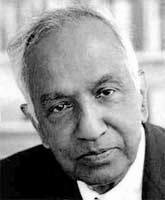
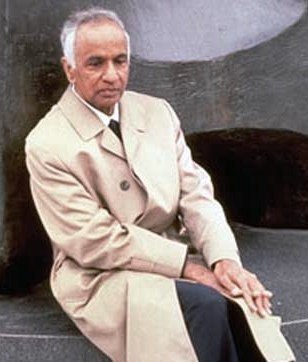
Subrahmanyan Chandrasekhar (1910-1995)

Subrahmanyan Chandrasekhar, a ‘Nobel Laureate’ in physics and one of the greatest astrophysicists of modern times was born on October 19, 1910 in Lahore, Punjab, British India (now in Pakistan). He was the son of Mr. C.S. Ayer and Sita Balkrishnan. His father was a civil servant, attaining a high position with the Indian railways. The Ayer had three sons and five daughters of whom Chandra was the oldest son. In 1916, the family moved to Madras where Chandra grew up. Chandrasekhar came from a highly educated South Indian family. He was the nephew of Indian Nobel Laureate Sir C.V.Raman.

Chandra was a brilliant student. At 15, he entered Presidency College, the most prestigious in Madras; in 1927, he started their physics honors course, graduating in 1930 at the top of his class. He read far beyond the curriculum, for instance about Fermi statistics, where he was most intrigued by Ralph H. Fowler’s work on the constitution of white dwarf stars. This subject inspired him to write his first scientific paper, “Compton Scattering and the New Statistics”, which was published in the “Proceedings of the Royal Society” in 1928. Upon graduation, based on this paper, Fowler at the University of Cambridge accepted him as a research student.

Being the nephew of the great C.V. Raman, a Nobel Prize winner in physics young Chandrasekhar’s interest in the subject came naturally to him. In 1930, at the age of 19, he completed his degree in physics from Presidency College, Madras (at Present Chennai) and went to England for post graduate studies at the Cambridge University. Chandrasekhar worked hard as a research student, and after he had taken his PhD, he was elected a fellow of Trinity College. Now feeling relaxed and more confident, he returned to the problem of white dwarfs. By a more complete calculation, he confirmed his earlier result: there is an upper limit to the mass of white dwarf. He was invited to give a talk on this subject at the Royal Astronomical Society in January 1935. But after his lecture, Eddington stood up and rejected Chandra’s results, not by scientific argument but by ridiculing the combination of special relativity theory with quantum statistics. Chandra was devastated.

Chandrasekhar was renowned for his work in the field of stellar evolution, and in the early 1930s, he was the first to theorise that a collapsing massive star would become an object so dense that not even light could escape it, now known as the Black hole. He demonstrated that there is an upper limit (known as ‘Chandrasekhar Limit’) to the mass of a White dwarf star. His theory challenged the common scientific notion of the 1930s that all stars, after burning up their fuel, became faint, planer-sized remmants known as white dwarfs. But today, the extremely dense neutron stars and black holes implied by Chandrasekhar’s early work are a central part of the field of astrophysics. Initially peers and professional journals in England rejected his theory. The distinguished astronomer Sir Arthur Eddington publicly ridiculed his suggestion that stars could collapse into such objects (black holes). Of course, Eddington was wrong. However, his resistance to Chandra’s mass limit was understandable: his life’s work had been to show that every star, whatever it’s mass, had a stable configuration. It was generally believed that white dwarfs were the end stage of stellar evolution, after their energy source was exhausted. Why should there be a limit to the mass of a star in its old age? Chandra appealed to physicists he knew- Rosenfeld, Bohr, and Pauli. Unanimously, they decided that there was no flaw in his argument. However, it took decades before the Chandrasekhar limit was accepted by the astrophysics community.

Disappointed, and reluctant to engage in public debate, Chandrasekhar moved to America, in 1937 joined the faculty as an Assistant Professor of Astrophysics at the University of Chicago, and remained there until his death. At Chicago, he immersed himself in a personalized style of research and teaching, tackling first one field of astrophysics and then another in great depth. He wrote more than half a dozen definitive books describing the results of his investigations. More than 100000 copies of his highly technical books have been sold. He also served as editor of the Astrophysical Journal, the field’s leading journal, for nearly 20 years; he presided over a thousand colloquia; and supervised PhD research for more than 50 students. Chandrasekhar was a creative, prolific genius whose ability to combine mathematical precision with physical insight changed humanity’s view of stellar physics.

The genius Subrahmanyan Chandrasekhar, known to the world as Chandra, died on August 21, 1995 in Chicago, Illinois, USA. He is best known for his discovery of the upper limit to the mass of a white dwarf star, for which he received the ‘Nobel Prize’ in physics in 1983.


Subrahmanyan Chandrasekhar wallpaper


Subrahmanyan Chandrasekhar Images


Scientist Subrahmanyan Chandrasekhar Photo

Sabtu, 06 Maret 2010

Professor Satish Dhawan (1920-2002)

Satish Dhawan was a pioneer engineer and Indian rocket scientist. He was born on September 25, 1920, in Srinagar, India. His father was a high-ranking civil servant of undivided India and retired as the resettlement Commissioner of Government of India at the time of partition. He completed graduation from the University of Punjab in Lahore (Now in Pakistan). He also completed B.A. in Mathematics and physics, and M.A. in English Literature and a B.E. in Mechanical Engineering. In 1947, he obtained an M.S. in Aeronautical Engineering from the University of Minnesota. Later, he moved to the California Institute of Technology, where he was awarded the Aeronautical Engineer’s Degree in 1949, and a Ph D in Aeronautical and Mathematics in 1951, which he pursued with eminent aerospace scientist Professor Hans W. Liepmann as adviser. Such an educational breadth, covering science, engineering and the humanities, and his distinguished family background, appears to have given him an ability to view the world from many different angles, and may have been responsible for his unique qualities as a leader.

After completion of education he joined the Indian Institute of Science in 1951 and became its Director in 1962. In 1972, He was appointed Chairman of the Space Commission and of the Indian Space Commission and of the Indian Space Research Organization, and Secretary to the Government of India in the Department of Space. In the following decade, he directed the Indian space programme through a period of extraordinary growth and spectacular achievement. Major Programmes were carefully defined and systematically executed, including in particular the launch of Indian satellites on Indian rocket vehicles. Pioneering experiments were carried out in rural education, remote sensing and satellite communications that led to the development of operational systems like INSAT. These projects were all distinguished by their keen sensitivity to the true needs of a developing nation, a confident appreciation of the ability of its scientists and engineers, and the carefully planned involvement of Indian space programme came to be seen in the 1980s as a model of technology development and application carried out within the country.

Professor Satish Dhawan received many awards for his contribution to science and technology, but following awards are few of them.
1) Padma Vibhushan Award, (India’s second highest civilian honour), in 1981.
2) Indira Gandhi Award for National Integration, in 1999.
3) Distinguished Alumnus Award, Indian Institute of Science.
4) Distinguished Alumnus Award, California Institute of Technology, 1969.

Prof. Satish Dhawan passed away on January 3, 2002.


Scientist Satish Dhawan Wallpaper


Satish Dhawan Picture


Satish Dhawan Photo


Professor Satish Dhawan Images

Sabtu, 27 Februari 2010

Dr. Sam Pitroda

Dr. Sam Pitroda is better known as “The father of India’s communication revolution”. Presently he is the Chairman of India’s National knowledge Commission, besides being the chairman and CEO of World- Tel Limited and the founder and CEO of C-SAM, Inc, he also worked as an advisor to the United Nations in 1992. He is an inventor, entrepreneur and policymaker. Sam Pitroda was born on 16 November, 1942 in Titlagarh, Orissa. His real name is Satyanarayan Gangaram Pitroda. His parents had migrated to Orissa from Gujarat. They were deeply influenced by Mahatma Gandhi and his philosophy. Sam Pitroda did his schooling at Anand Vallabh Vidyalaya in Gujarat, and completed his Master degree in physics and Electronic from Maharaja Sayajirao University of Baroda, Gujarat. In the year1964, Sam Pitroda went to the US and did his Masters in Electrical Engineering in Chicago.

Sam Pitroda has many technology patents to his name. He was involved in research work on telecommunications and handheld computing. He introduced microprocessor in telephone switches leading to digital switching and invented the Electronic Diary in 1975. He designed his own computer-themed card game called Compucards in 1983. He returned to India in 1984 on the suggestion of the then Prime Minister Mrs. Indira Gandhi and founded the Center for Development of Telematics (C-DOT). In 1987, he became advisor to the then Prime Minister Rajiv Gandhi and was responsible for revolutionizing India’s foreign and domestic telecommunications policies. He is widely known as the brain behind the introduction of the public Call Offices (PCO) across the length and breath of the country. He left the country once again after an argument with K.P. Unnikrishnan, the minister for telecommunication in the V.P. Singh government. He has served as an advisor to the UN. In 2004, Indian Prime Minister Dr. Manmohan Singh recruited him to head the National Knowledge Commission.

When we think about yellow phone booths all across India, we must remember to Sam Pitroda. For this facility to public, totally credit goes to Sam Pitroda. It is interesting to know that Sam Pitroda first used a telephone only after moving to the US. The biggest virtue of Sam Pitroda is that he has a definite vision to use technology for the benefit and betterment of society. Along with being a pioneer in telecom, Sam Pitroda has been made strong case for food, clean water, and adequate shelter for the unprivileged section. Due to his hard work, Sam Pitroda has brought telephones to some of the worlds previously isolated regions. In the field of telecom, Sam’s emphasis was on accessibility rather than density. By providing public access to telephones, Mr. Sam Pitroda revolutionized the state of telecommunications in India. Sam Pitroda has also featured in several newspapers, magazines radio, and TV programs.

In July 2009, the Government of India invited Mr. Sam Pitroda to head an expert committee on ICT in Railways. In October 2009, Sam Pitroda was appointed as Advisor to Prime minister of India (Dr. Manmohan Singh) on Public Information Infrastructure and Innovations with the rank of Cabinet Minister. He has been awarded the Padma Bhushan award in 2009 by the Government of India for his contribution to Science and Engineering.


Scientist Dr. Sam Pitroda photo


Dr. Sam Pitroda with PM Dr. Manmohan Singh


Dr. Sam Pitroda wallpaper


Dr. Sam Pitroda picture


Dr. Sam Pitroda Photo


Dr. Sam Pitroda Images

Kamis, 18 Februari 2010

Scientist Raja Ramanna (1925-2004)

Raja Ramanna was a talented personality – an eminent nuclear physicist, a highly accomplished technologist, an able administrator, an inspiring leader, a gifted musician, a scholar of Sanskrit literature and philosophy, and above all a completed human being. He is well known for his work in “Indian Nuclear Program”. He was born on January 28, 1925 in Tumkur, Karnataka. He was the son of B. Ramanna and Rukminiamma. His father was in the judicial service of the Mysore state and earned the reputation of being a kind-hearted judge.

Raja Ramanna started his studies at “Bishop Cotton Boy’s School, Bangalore. After that he completed graduation from Madras Christian College. He obtained Ph. D. in nuclear physics and L.R.S.M. from King’s College, London. He specialised in nunuclear physics, nuclear reactor physics and design, European music and philosophy. Dr. Raja Ramanna was the director of Bhabha Atomic Research Centre (BARC) for over a decade. He was also the Union minister of state for defence in 1990 in the V.P. Singh government. In 1997, he became a Member of Parliament through the upper house, the Rajya Sabha. He was also the first director of National Institute of Advanced Studies, Bangalore.

On May 18, 1974, India tested its first nuclear device in the Pokhran desert in Rajasthan. The credit for this achievement goes to Raja Ramanna and his colleagues, as also to Bhabha, who laid the foundation for the country’s nuclear programme. This was, however, not Ramanna’s first success. He was also the man mainly responsible for designing and installing the country’s first series of nuclear reactors, Apsara, Cirus and Purnima. He died on September 23, 2004.


Scientist Raja Ramanna


Dr. Raja Ramanna wallpaper


Dr. Raja Ramanna picture


Dr. Raja Ramanna Photo


Dr. Raja Ramanna Images

Senin, 15 Februari 2010

Professor Raj Reddy

Dabbala Rajagopal Reddy was born on June 13, 1937 in Katoor, Andhra Pradesh, India. His father Srdenivasulu Reddy was an agricultural landlord and his mother, Pitchamma, was a homemaker. He is a world-renowned researcher in Artificial Intelligence, Robotics, and Human-Computer Interaction better known as "Professor Raj Reddy". Currently, he is serving as the Director of the West Coast campus of Carnegie Mellon University, USA. He received his Becholor degree in civil engineering from Guindy Engineering College of the University, Madras, (Now Anna University, Chennai), India, in 1958. After that Professor Reddy moved to Australia, and there he received his Master’s degree in technology from the University of New South Wales, Australia, in 1960. He also received a doctor’s degree in Computer science from Stanford University in 1966.

On the same year he started his academic career as an Assistant Professor in the same University. After that he joined a member of Carnegie Mellon University faculty in 1969. He was the Founding Director of the Robotics Institute at the University from 1979 to 1991. Now as the Director of the West coast campus. Dr. Reddy’s research interests include the study of human-computer interaction and artificial intelligence. His current research project includes speech recognition and universal digital libraries, an Information Appliance for rural environments for use by illiterate people, where all creative works of the human race are available to anyone anywhere.

On the personal information, Dr. Reddy’s hobbies are walking and basically reading. He lives in Pittsburgh with his wife of 37 years and they have two daughters. His daughters live on the West Coast, in Silicon Valley, California. He visits his native country once a year, his seven brothers and lives near Bangalore. Today, this brilliant scientist is among the most respected names in the US in the field of robotics and artificial intelligence. He was awarded the Padma Bhushan by India in 2001 and the Legion of Honor by President Francois Mitterrand of France in 1984. He is also a fellow of the Acoustical Society of America, IEEE and AAAI, Fellow. He received the 2005 IJCAI Donald E. Walker Distinguished Service Award For, “His outstanding service to the AI community as President of AAAI, Conference Chair of IJCAI-79, and his leadership and promotion of AI internationally,” He also received the IBM Research Ralph Gomory Visiting Scholar Award in 1991.

Recently, Dr. Reddy received the Honda prize for his, “Contributions to eco-technology, the concept that “Contributions to eco-technology, the concept that technology should not pursue efficiency and profits alone but should be geared toward harmony with the environment surrounding human activities.”


Scientist Professor Raj Reddy Photo


Professor Raj Reddy, India


Professor Raj Reddy With Scientist Dr. APJ Abdul Kalam


Professor Raj Reddy Photo


Professor Raj Reddy Picture


Professor Raj Reddy Wallpaper


Professor Raj Reddy Images


Professor Dabbala Rajagopal Reddy


Great Scientist Raj Reddy